

Most wedding planners offer three levels of help: full planning, partial planning and on-the-day coordination. The names sound clear enough, but what’s included varies from planner to planner.
Choosing the wrong level means either paying for help you don’t need, or running out of support when you need it most. Here’s how full planning vs partial planning vs on-the-day coordination compare, and how to decide.
Full planning vs partial planning vs on-the-day: at a glance
This is a useful starting point. Every planner defines these levels slightly differently, so always ask for a written list of what’s included.
| Full planning | Partial planning | On-the-day coordination | |
|---|---|---|---|
| When the planner starts | At the very beginning | Part-way through | In the final weeks |
| Venue search | Yes | Usually already booked | Already booked |
| Supplier research and booking | All suppliers | The ones you haven’t booked | No, you book them |
| Design and styling suppliers | Usually included: sourcing, briefing and coordinating stylists, florists and décor suppliers | Often included or optional | Rarely |
| Budget management | Throughout | From the point they join | No |
| Running the day | Yes | Yes | Yes |
| Best for | Busy couples, large or complex weddings | Couples who’ve started but want expert help | Organised couples who’ve booked everything |
Full planning
With full planning, the planner is involved from the first conversation to the last guest leaving. That usually means:
- setting and managing the budget
- finding and booking the venue
- researching, shortlisting and booking every supplier
- reviewing supplier contracts and managing payments and deadlines
- sourcing, briefing and coordinating external design, styling and floral suppliers, from the colour palette to the tablescapes
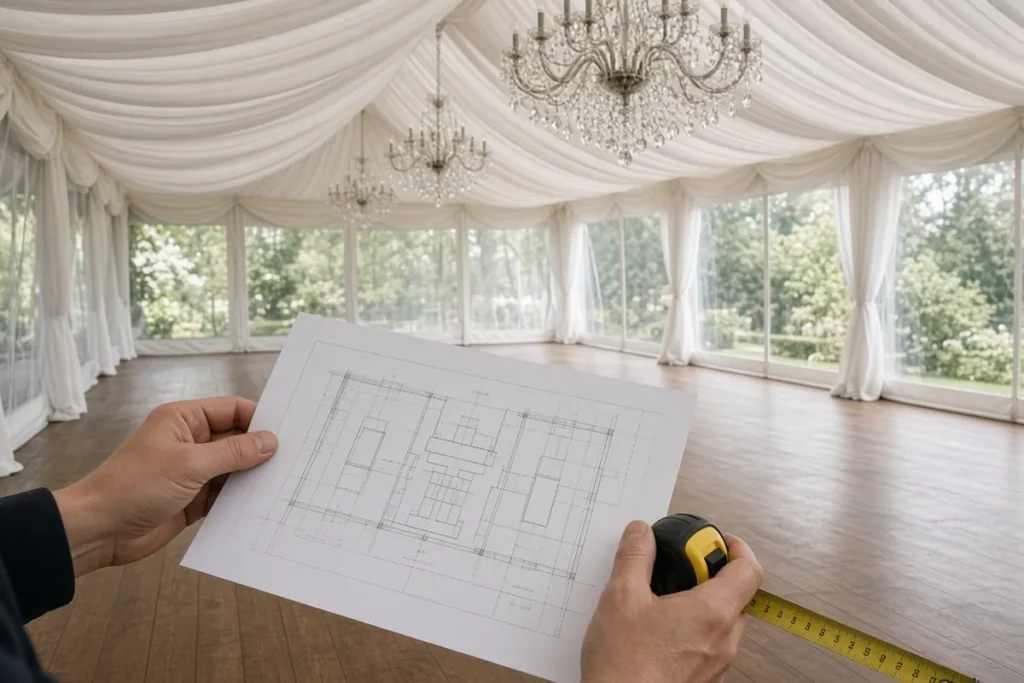
- building the timeline, floor plan and seating logistics
- running the rehearsal (if you have one) and the day itself
Who full planning suits
Full planning makes most sense if you’re short on time, planning from abroad or another part of the country, inviting a large number of guests, or planning something with a lot of moving parts: a marquee, multiple days of celebrations, or two ceremonies.
It’s also the right choice if you simply don’t want to spend the next year in spreadsheets.
“We truly could not have done it without them.”
Jude & Gloria, Google review
Jude & Gloria wrote that after we coordinated their wedding and helped with the planning.
Partial planning
Partial planning is for couples who’ve made a start, often booking the venue and a few key suppliers, and want a professional to take over the rest. At Ovents we call this our Partial planning package.

Typically, partial planning includes:
- a review of everything you’ve booked so far, including contracts and timings
- help finding and booking the remaining suppliers
- coordination of design and styling suppliers, so everything ties together
- a detailed timeline and supplier schedule
- management of the final weeks and the day itself
Who partial planning suits
It suits couples who enjoy some of the planning but don’t want all of it, or who started on their own and found it more time-consuming than expected. It’s also useful when you’ve booked a venue with in-house catering and just need help with everything around it.
On-the-day coordination
Despite the name, on-the-day coordination almost never starts on the day. A good coordinator gets involved in the final weeks before the wedding, so they know every detail before they arrive.
Usually that covers:
- a handover meeting to go through your plans
- contacting every supplier to confirm arrival times, set-up needs and contacts
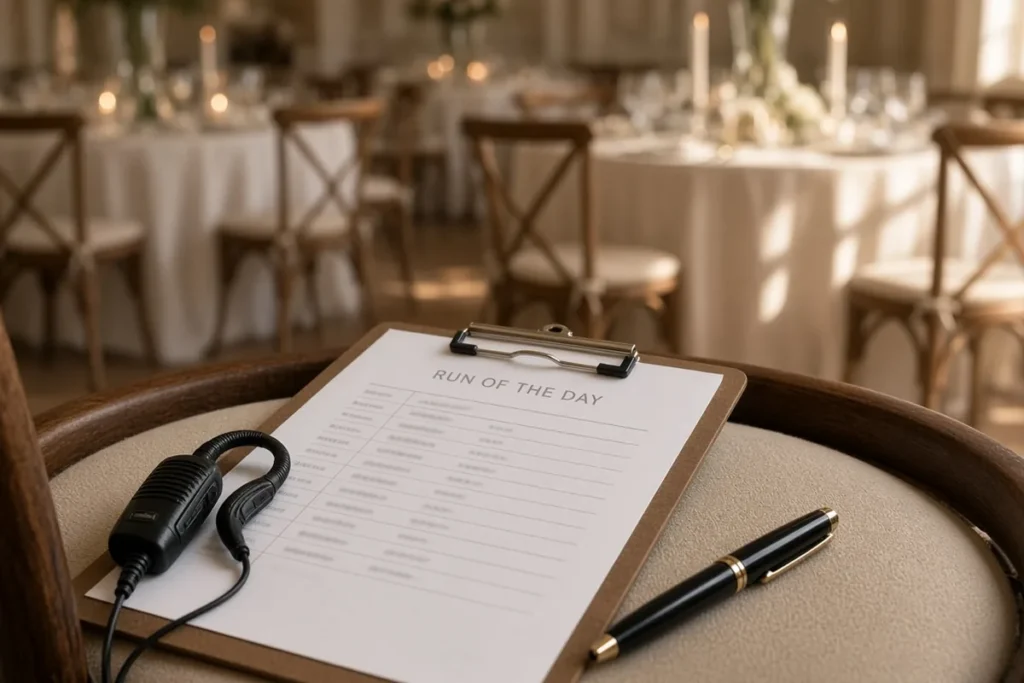
- a detailed running order for the day
- a venue walk-through
- managing set-up, timings and suppliers on the day, so you and your family don’t have to
Who on-the-day coordination suits
It’s ideal if you’re organised, have booked all your suppliers yourself, and want someone to take over on the day. Without one, the jobs of chasing a late delivery or keeping speeches on time tend to fall to a parent, a best friend or the couple themselves.
How to choose: five questions to ask yourselves
If you’re unsure which level you need, these five questions usually make the decision clearer.
1. How much time do we realistically have?
Be honest. If you both work long hours, full or partial planning will save you a lot of evenings and weekends.
2. What have we already booked?
Nothing yet: full planning. Venue and a couple of suppliers: partial planning. Everything: on-the-day coordination.
3. How complex is the wedding?
Large guest lists, multi-day events, marquees, multiple venues and cultural ceremonies with specific traditions all benefit from more planning support.
4. Do we enjoy planning?
Some couples love choosing suppliers and designing the look. Others find it stressful. Choose the level that lets you enjoy the parts you like.
5. Who will run the day if we don’t hire someone?
If the honest answer is “a family member who’d rather be a guest”, you probably need at least on-the-day coordination.
What about cost?
Full planning costs the most because it involves the most hours. On-the-day coordination costs the least.
For UK benchmarks and what drives the fee, see our guide to how much a wedding planner costs in the UK. At Ovents, we give you a transparent, itemised proposal after a free consultation, so you can compare options properly.
Can you change your mind later?
Usually, yes. Many couples start with on-the-day coordination and realise a few months in that they want more help.
Most planners will upgrade you to partial planning if they have capacity, though it’s easier the earlier you ask.
Not sure which level is right for you?
Ovents offers full planning, partial planning and on-the-day coordination for weddings in London and across the UK. Have a look at our wedding planning services, then book a free consultation.
We’ll talk through what you’ve already booked and suggest the level of help that fits.
Frequently asked questions
What’s the difference between a wedding planner and a venue coordinator?
A venue coordinator works for the venue and looks after the venue’s side of things: rooms, catering and venue staff. A wedding planner or coordinator works for you and manages all your suppliers, timings and the whole day, not just the venue.
How far in advance should we book on-the-day coordination?
Book as soon as you know you want it, as dates in peak season go early. The coordinator will usually start the detailed work in the final weeks before the wedding.
Is partial planning the same as month-of coordination?
Not quite. Month-of or on-the-day coordination starts in the final weeks. Partial planning starts earlier and includes help booking remaining suppliers, including design and styling specialists.
Can a planner help with design and styling suppliers only?
Full planning typically includes sourcing, briefing and coordinating independent stylists, florists and décor suppliers — the planner does not usually produce the design itself. If you already have a stylist or florist and mainly need coordination, ask whether that can be included in partial planning or on-the-day coordination.