
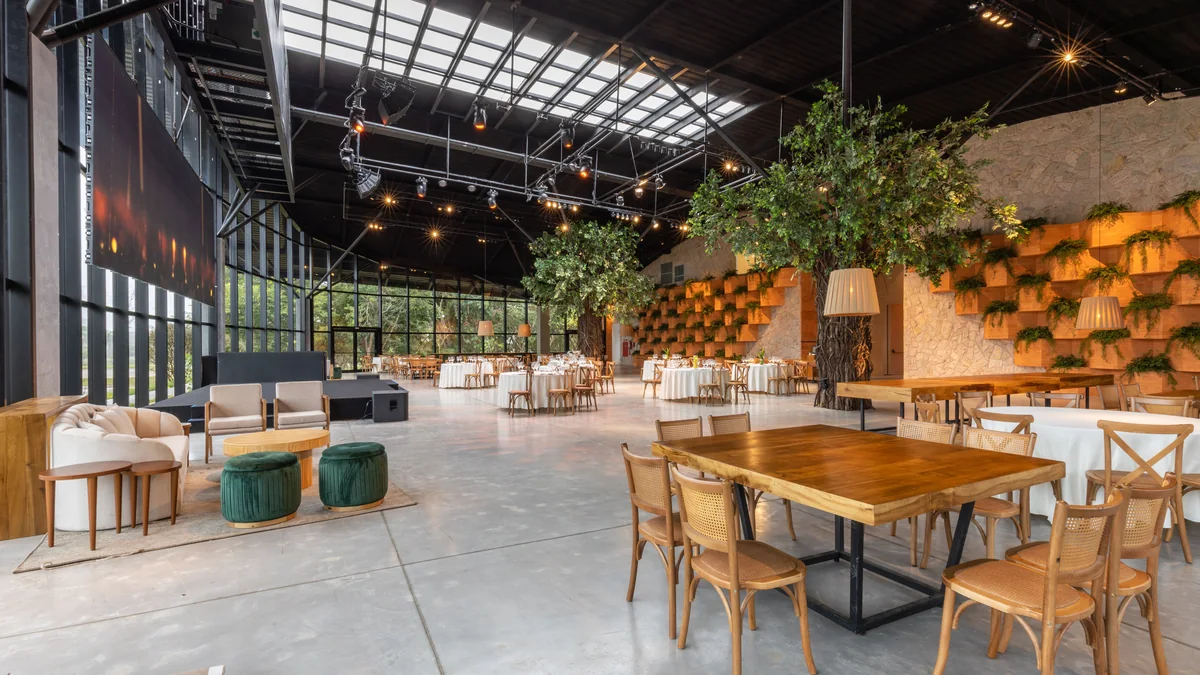
Corporate events have more stakeholders than most private ones: leadership, finance, marketing, HR and the guests themselves all have a view. A clear timeline keeps everyone aligned and stops the last month turning into a scramble.
This corporate event planning checklist works for most conferences, awards dinners, client events, summer parties and Christmas parties. Bigger events may need longer, but the order stays the same.
Six months out: start your corporate event planning checklist
This is the moment to agree why the event exists, what it can cost, and who is responsible for each part of it.

Agree the objective
Start by writing down why the event exists and how you’ll know it worked. For example:
- a client event to strengthen relationships with key accounts
- a conference to launch a new strategy to staff
- an awards dinner to recognise teams and boost retention
Every later decision, from venue to running order, should support that objective.
Set the budget and approval process
Agree the total budget, what it covers (VAT, travel, accommodation, staff time) and who signs off spending. Build in a contingency for the unexpected.
Pick a date and a guest number range
Check for clashes with industry events, school holidays, financial year-end and major public events. A guest number range, rather than a fixed figure, helps you search for venues.
Assemble the team
Name one person who can make decisions, and agree who’s responsible for content, guest list, communications and suppliers. If you’re bringing in an event planner, this is the time.
Five months out: venue and key suppliers
Once the date and brief are clear, lock in the venue and the suppliers who are hardest to book later.
Shortlist and book the venue
Look at capacity for your layout (theatre, cabaret or banqueting), accessibility, transport links, AV capability, catering options, load-in times and any restrictions on noise or finish time. Visit your shortlist in person.
Book the suppliers who get booked up first
Depending on the event, this may include caterers, AV and production, entertainment, photographers and videographers, and speakers or hosts. Peak dates, especially in December, go early.
Read the contracts carefully
Look at minimum spends, cancellation terms, attrition clauses (what happens if numbers drop) and what’s included in the hire.
Four months out: content and guest experience
With the venue in place, turn to what guests will actually see, hear and do.
Plan the programme
Draft the running order: arrival, welcome, sessions or speeches, meals, breaks, entertainment and finish. Keep speeches short and give guests time to talk to each other; for many people, that’s the main reason to come.
Design the guest experience
Think about the event from a guest’s point of view: how they’ll arrive, where coats and bags go, what they’ll see first, and where they’ll queue. Small details like a well-staffed bar and easy cloakroom make a big difference to how the event feels.
Brief the design and branding
Agree the look and feel, including stage, signage, table styling and any branded elements, and when artwork is needed.
Three months out: invitations and logistics
This is the point at which the guest list, travel and formalities need to catch up with the programme.
- Send invitations with a clear RSVP date and a way to capture dietary and access needs.
- Plan travel and accommodation if guests are coming from outside the city.
- Confirm speakers and brief them on timings, audience and format.
- Check insurance, licensing and risk assessments with the venue and suppliers.
Two months out: detail and confirmations
The plans should now be specific enough to share with every supplier.
- Confirm catering choices, including dietary options.
- Finalise the AV brief and stage plan.
- Draft the floor plan and seating approach.
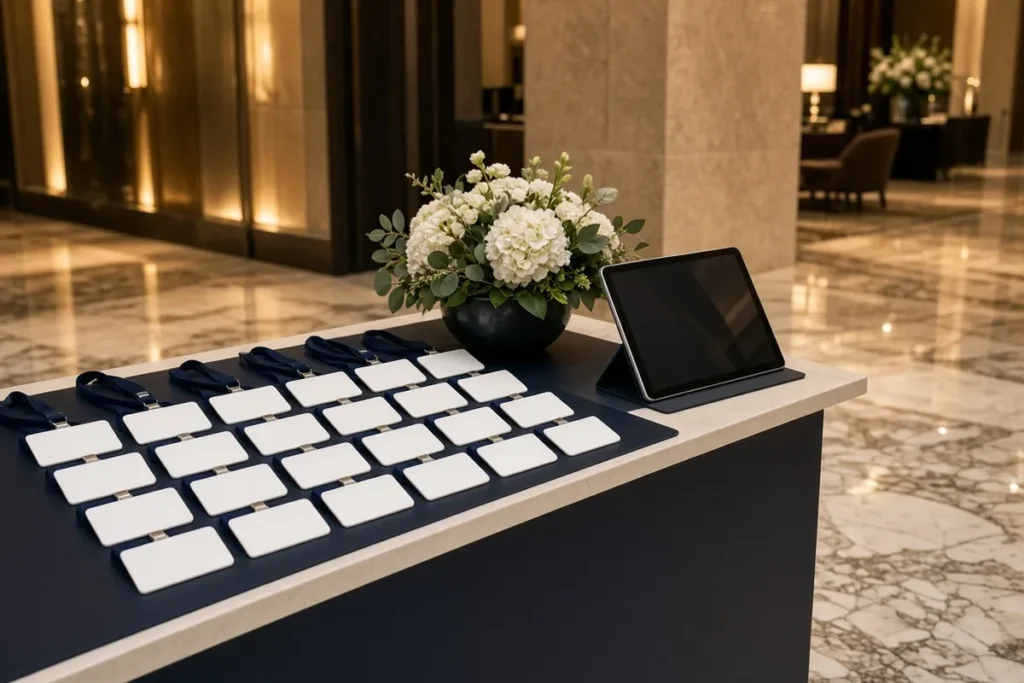
- Order printed materials, name badges and signage.
- Plan your communications: reminders, joining instructions and any pre-event content.
One month out: lock it down
Final numbers, briefings and a site visit should all happen in this month, before the last-week rush.
- Chase outstanding RSVPs and confirm final numbers with the venue and caterer by their deadline.
- Share a detailed running order with every supplier, including arrival times, contacts and set-up needs.
- Run a site visit with the venue and key suppliers.
- Prepare speaker slides and test them on the venue’s system if possible.
- Confirm staff and volunteer roles for the day.
The week before
Keep this week practical and confirmatory rather than creative. The aim is that nothing is left to chance.
- Reconfirm every supplier and arrival time.
- Print final guest lists, seating plans and running orders.
- Send joining instructions to guests: venue address, timings, dress code and travel tips.
- Prepare an on-the-day kit: printed schedules, contact sheet, chargers, tape, scissors, pens and a first-aid kit.
On the day
Arrive with enough time to walk the space, test the technical cues and settle the team before the first guest.
- Arrive early for set-up and walk through the full running order with the venue manager.
- Run technical rehearsals for speeches and presentations.
- Keep one person free to solve problems, rather than tied to a fixed task.
- Stick to the timings, especially before dinner and speeches.

The day after: follow up
The event isn’t finished when the last guest leaves. A prompt follow-up is what turns a good day into a useful one.
- Thank guests, speakers and suppliers.
- Send a short feedback survey while the event is fresh.
- Share photos, recordings or key messages.
- Review the budget against actual spend.
- Measure results against the objective you set six months ago.
When to bring in an event planner
If your team is already stretched, an event planner takes on the supplier research, contracts, logistics and on-the-day management, so your people can focus on guests and content.
“Ovents is the first team I recommend whenever events are being planned.”
Francis D., Google review
For a closer look at bigger launches and conferences, read our guide to planning a product launch or conference in London.
Planning a corporate event?
Ovents plans conferences, awards dinners, client events and staff parties in London and across the UK. See our corporate event planning services, or book a free consultation and we’ll send a transparent, itemised proposal.
Frequently asked questions
How far in advance should you plan a corporate event?
For most events, three to six months is comfortable. Large conferences and December parties benefit from starting earlier, as popular venues and dates book up well ahead.
What should a corporate event budget include?
Venue hire, catering and drinks, AV and production, staffing, entertainment, décor, printing, travel and accommodation, insurance, VAT and a contingency.
How do you reduce no-shows at corporate events?
Set a clear RSVP date, send reminders a week and a day before, share a compelling programme, and make it easy for guests to let you know if they can’t come.
Should we hold our event midweek?
Midweek dates can be easier to book and suit daytime conferences and client events. For evening parties, Thursday is often a popular choice. It depends on your guests and objectives.